
An Iranian delegation, led by Foreign Minister Abbas Araghchi, is expected to arrive in Islamabad for the second round of peace talks with the US, according to Pakistani media reports. This follows a phone call between Deputy Prime Minister Ishaq Dar and Araghchi regarding the US-Iran ceasefire and Pakistan's diplomatic efforts.

US President Donald Trump expressed confidence in America's position amid US-Iran peace talks in Islamabad, stating that Washington stands to 'win' regardless of a deal.

The meeting follows a ceasefire agreement that was announced and welcomed by Shehbaz Sharif, who also extended invitations to both delegations for further negotiations.

China has urged Pakistan and Afghanistan to engage in direct talks to resolve their ongoing conflict, offering to mediate and calling for a ceasefire.

Pakistan has intensified its efforts to bring the US and Iran back to the negotiating table to end the war in West Asia, following President Trump's extension of the ceasefire. Pakistani officials have engaged with Iranian, Turkish, and British counterparts to promote dialogue and diplomacy for a peaceful resolution.

The Iranian Foreign Ministry has stated that Tehran currently has no plans for a subsequent round of negotiations with the United States, according to the state media Tasnim news agency. This announcement comes as international mediators had hoped for a follow-up to the Islamabad talks before the looming ceasefire deadline.

Uncertainty surrounds the planned second round of peace talks between the US and Iran in Islamabad, as both sides engage in brinkmanship. Despite Pakistan's security preparations, Iran has yet to confirm its attendance, citing a lack of seriousness from the US in pursuing diplomacy and violations of the ceasefire.

Ebrahim Azizi, head of Iran's National Security Committee, stated that diplomatic talks with the US are governed by national interest and security, viewing negotiations as an extension of military efforts.
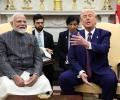
Prime Minister Narendra Modi and US President Donald Trump discussed the West Asia crisis and the importance of keeping the Strait of Hormuz open and secure. They also reviewed progress in bilateral ties and anticipated upcoming deals in the energy sector.

US President Donald Trump threatened to bomb Iran if a deal is not reached before the ceasefire ends, while Pakistan urged both sides to extend the truce and pursue diplomacy.

This sharp Iranian response came after a series of uncompromising remarks from the US president.

An Iranian delegation, led by Foreign Minister Abbas Araghchi, concluded high-level meetings in Islamabad, delivering an 'official list of demands' to Pakistani leaders for the US and Israel. This comes as President Trump cancelled his envoys' visit to Islamabad amid ongoing efforts to facilitate peace talks between Iran and the US.

Uncertainty surrounds the US-Iran talks as a two-week ceasefire approaches its end. Pakistan is attempting to mediate, but tensions remain high after a recent naval incident.

Pakistan is playing a key role in facilitating talks between the US and Iran, but the future of these negotiations remains uncertain. Despite ongoing diplomatic efforts, no dates have been set for a second round of discussions.

Iranian news agencies have denied reports of Iranian officials travelling to Pakistan for negotiations with the United States, even as Pakistan prepares for potential talks and faces criticism from Israel.

Pakistan's Defence Minister Khawaja Asif has indicated that further Iran-US negotiations are anticipated soon, following talks in Pakistan. Despite initial optimism, the previous round of negotiations did not result in a lasting peace agreement.

Pakistan's Foreign Minister Ishaq Dar met with his counterparts from Egypt and Turkiye in Islamabad ahead of a quadrilateral summit, including Saudi Arabia, to discuss the ongoing conflict in West Asia and explore avenues for peace.

US President Donald Trump has indefinitely extended the ceasefire with Iran at the request of Pakistan, aiming to allow Tehran's leadership time to form a unified proposal to end the seven-week war.

Iran has denied agreeing to participate in a second round of peace talks, contradicting claims made by the United States. The denial comes as tensions remain high in West Asia, with a ceasefire window nearing its end.

Pakistan's Chief of Defence Forces Field Marshal Asim Munir held talks with Iranian leaders in Tehran to help resolve the conflict between the US and Iran, following a recent ceasefire agreement.

As he settled down to his job as army chief, General Qamar Javed Bajwa -- who died last week; his passing did not merit even an obituary in major print or electronic media in Pakistan! -- developed a vision of reducing his country's and his institution, the army's traditional hostility toward India, points out Rana Banerji, who headed the Pakistan desk at RA&W.
Pakistan's Foreign Minister Ishaq Dar has called for dialogue to address the ongoing conflict in West Asia, emphasising the importance of diplomatic engagement and sustained efforts to promote peace and stability in the region.

Pakistan's Prime Minister Shehbaz Sharif has engaged in extensive diplomatic efforts to de-escalate the conflict in West Asia, offering to host talks between the US and Iran and engaging with leaders from Saudi Arabia, Qatar, Malaysia, the UK, China, and the European Union.
Pakistan's Prime Minister Shehbaz Sharif has offered to mediate between the US and Iran to de-escalate the ongoing conflict in West Asia, following a joint US-Israel attack on Iran. Sharif has been in contact with Saudi Arabia, the UAE, and other nations to promote dialogue and diplomacy.

Pakistani Prime Minister Shehbaz Sharif is actively engaged in diplomatic efforts to de-escalate tensions in West Asia, offering to host talks between the US and Iran and engaging with regional leaders to promote peace and stability.

Direct talks between the US and Iran, mediated by Pakistan, have failed to produce an agreement after 21 hours of negotiations, with disagreements over Iran's nuclear ambitions and sanctions proving insurmountable.

Talks between Iran and the US in Pakistan concluded without a deal due to disagreements over key issues, including Iran's nuclear programme and sanctions, despite efforts to find common ground.

The Congress party has called on the BJP-led government to adopt a unified national approach to restore India's role as a voice for peace, criticising the government's foreign policy and its impact on India's global standing.

'US and Iran have not annulled the ceasefire, and the possibility of continuing negotiations remains open.'

A new US intelligence report warns that India and Pakistan's relations remain at risk for nuclear conflict, fueled by terrorism and escalating tensions in the region.

Saudi Arabia and the UAE are actively pushing Trump to take the war to its bitter finish and 'erase' Iran's presence in the geopolitics of the region. Simply put, the two most powerful Sunni Arab oligarchies are on the same page as Israel. Such interference increases the risk of a breakdown in dialogue between the US and Iran, points out Ambassador M K Bhadrakumar.

Amidst escalating tensions in West Asia, Pakistan's defence chief visited Saudi Arabia to discuss regional security and the mutual defence pact between the two nations, focusing on de-escalation strategies.

'TTP has vowed to take revenge for the attacks that Pakistan is carrying out against Afghanistan.' 'To diminish this threat, Pakistan is hitting Afghanistan hard.'

Pakistan have agreed to play India in the T20 World Cup match in Sri Lanka after diplomatic outreach and ICC-led talks ended the boycott standoff.

Pakistan declared an 'open war' with Afghanistan following airstrikes targeting Taliban fighters in response to alleged cross-border attacks. The situation has drawn international concern, with calls for de-escalation and diplomatic resolution.

China and Pakistan concluded their strategic dialogue, reiterating their opposition to unilateral actions in South Asia and discussing Kashmir, Afghanistan, and trilateral cooperation.

Omar Abdullah states that normalisation of relations with Pakistan is difficult due to terror incidents and lack of a credible civilian partner in Islamabad.
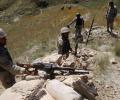
Pakistan has handed over evidence-based demands to mediators in Istanbul talks with the Afghan Taliban, aiming to end cross-border terrorism. The talks follow recent border clashes and aim to defuse tensions between the two sides.
Pakistani and Afghan forces exchanged fire, testing the fragile peace between the two sides as officials from both countries held talks in Turkiye to find a lasting solution to cross-border militancy.

Pakistan confirms that talks with the Afghan Taliban to address cross-border terrorism have failed, citing a lack of commitment from Kabul to control militancy. Pakistan accuses the Taliban of supporting anti-Pakistan terrorists and blames India for the failure of the talks.
 © 2026 Rediff.com - Advertise with us - Disclaimer - Privacy Policy - Sitemap - Feedback - About us - Terms of use - Grievances